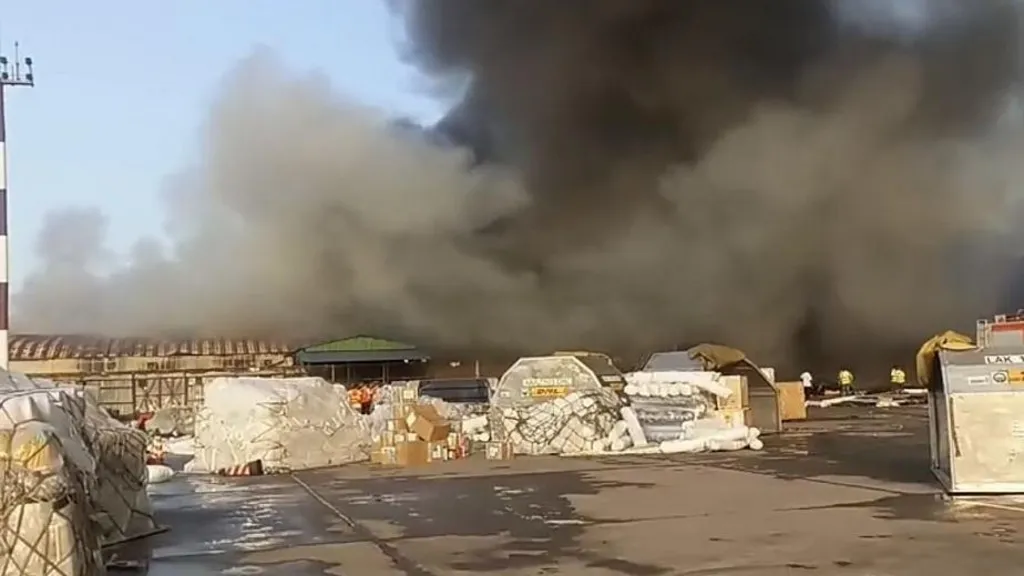
A devastating blaze ripped through the cargo section of Hazrat Shahjalal International Airport (HSIA) in Dhaka on Saturday, triggering concerns that the country could face losses of more than $1 billion when direct damage and knock‑on effects are taken into account. ENCA+5Al Jazeera+5The Business Standard+5
What happened
The fire broke out at around 14:15 local time in the airport’s cargo village — the section that handles urgent imports and air‑exports, including raw materials, accessories, and samples for the ready‑made garment (RMG) industry and other time‑sensitive sectors. The Business Standard+3en.bd-pratidin.com+3en.bd-pratidin.com+3
Fire‑service units, including 37 separate teams supported by army, navy and air force personnel, battled the blaze, which was declared under control only after many hours. ENCA+1
As a result, the import hub was essentially gutted — warehouses stacked with fabrics, accessories, samples, pharmaceuticals and electronics went up in smoke or were rendered unusable by heat, smoke or the subsequent halt in operations. Al Jazeera+2The Daily Star+2
Why the damage is so large
The estimates go far beyond the value of the goods burned. Several key factors amplify the impact:
- The cargo village handles hundreds of tonnes daily — during the peak October to December export season, this volume increases significantly. Al Jazeera+1
- Many consignments are samples used to win new orders in the global apparel market. If those samples are lost, future business may shift to competitors. The Business Standard+1
- Delays in raw materials can force factories to change logistics, use more expensive air‑freight or incur penalties/discounts from buyers for late shipment. For example, one exporter lost low‑value accessories but estimated the downstream hit on shipment and discount costs at dozens of times more. bdnews24.com
- Importers of critical parts (pharmaceutical ingredients, electronics, machine parts) are also affected, which can halt production or create bottlenecks beyond the apparel sector. The Business Standard+1
- The country’s image as a reliable exporter is at stake: foreign buyers may beef up scrutiny, halt new contracts or divert orders elsewhere if they perceive risk. The Daily Star+1
Estimated cost and implications
Trade and industry associations in Bangladesh are warning that the cumulative losses — direct and indirect — could exceed $1 billion (around Tk 12,000 crore). en.bd-pratidin.com+1
One section of reporting states:
“We fear export losses could cross $1 billion.” Al Jazeera+1
Economists point out that the actual loss is hard to pin down yet because many effects (loss of future orders, increased logistics cost, reputational damage) will play out over months. Dhaka Tribune
Broader economic risk
Bangladesh’s RMG sector accounts for a significant part of its export economy; any disruption in the logistics chain hits not just individual factories but the national trade flow. The airport cargo village is a vital node. ENCA+1
If shipments are delayed or cancelled, it could lead to job losses, delayed production schedules, and increased costs for firms already operating on tight margins. Moreover, the fire underscores infrastructure and safety vulnerabilities in the country’s export‑logistics backbone. Dhaka Tribune+1
What comes next
Industry groups have issued multi‑point demands — including fast‑tracked insurance settlement, creation of a special government compensation fund for uninsured goods, modernization of the cargo village with enhanced fire and safety measures, relocation of chemical storage, and automation of warehouse management. en.bd-pratidin.com+1
The government and airport authorities have launched an investigation to determine cause (accidental vs sabotage) and to assess how long operations may be disrupted. ENCA+1
Conclusion
While the exact tally of losses will only become clear in weeks or months, it is already evident that the HSIA cargo‑village fire could inflict damages far beyond the burnt goods — threatening export flows, costing new orders, and shaking trust in Bangladesh’s logistical reliability. The $1 billion figure, then, is not just a headline estimate but a plausible marker of cascading risk into which the country’s export‑dependent economy has stepped.